

Key Takeaways
- Moneylender scams in Singapore are becoming more convincing, with scammers impersonating licensed moneylenders and using professional-looking websites, messaging apps, and fake identities to trick victims.
- A common loan scam tactic in Singapore involves upfront fees or “processing charges”, which legitimate lenders do not request before loan approval or disbursement.
- Always verify that you are dealing with licensed moneylenders in Singapore by checking the official Registry and confirming business details such as licence number, address, and contact information.
- Be cautious of unlicensed moneylenders and unsolicited loan offers sent via WhatsApp, Telegram, SMS, or social media, as these are major red flags for online scams in Singapore.
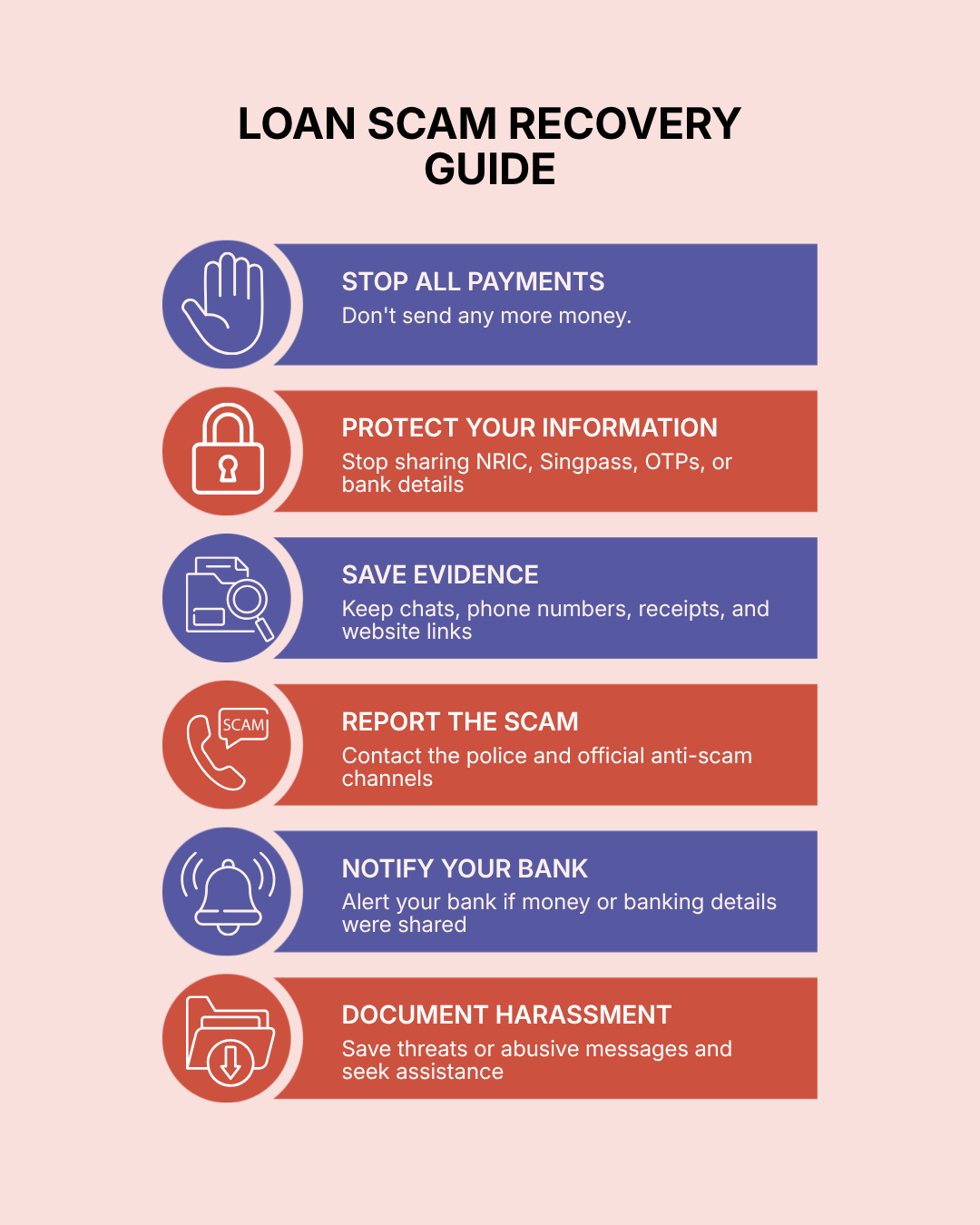
- If you suspect you’re the victim of a moneylender scam, act quickly—stop all payments immediately, avoid sharing personal information, preserve evidence, and report the incident to the police and your bank immediately.
Moneylender scams in Singapore are becoming increasingly sophisticated—so much so that many borrowers don’t realise something is wrong until it’s much too late. Perhaps it’s a seemingly innocuous message offering low-interest loans, a website that looks completely legitimate, or a loan approval that came instantly—everything felt smooth and professional, and nothing sounded like those loan scams in Singapore that have been widely reported on.
The truth is this: scammers today often pose as licensed moneylenders in Singapore, using polished websites, fake business profiles, and convincing identities to appear legitimate. And this is exactly why online scams in Singapore are so dangerous.
So, how can you stay safe from loan scams? What are the biggest but most commonly missed signs of moneylender scams? Keep reading to find out.
What Are Moneylender Scams?
First things first—how would you know if you’re dealing with a moneylender scam? A moneylender scam is a fraudulent scheme in which criminals impersonate legitimate moneylenders to trick individuals into transferring money or revealing personal and financial information. These scams often appear convincing because they give lenders the impression that professional lending practices are in place, when that couldn’t be further from the truth.
Common signs of a loan scam include loan approvals that seem too easy, upfront fee requests disguised as “administrative” or “processing charges”, and impersonation of a licensed moneylender in Singapore. Many scammers operate through WhatsApp or Telegram, offering quick approvals with minimal checks, while others create phishing websites that resemble official lending platforms.
In some cases, victims only realise they are dealing with unlicensed moneylenders after money has already been transferred or sensitive data has already been compromised.
Common Types of Loan Scams in Singapore
#1 Upfront Fee Loan Scams
One of the most common forms of loan scams in Singapore involves scammers requesting payment before any loan is disbursed. These charges are often disguised as processing fees, administrative costs, GST payments, insurance fees, activation fees, or verification charges.
Once payment is made, the scammer typically disappears or continues requesting additional fees, claiming the loan is “almost approved.” Most borrowers, not wanting to lose the money they’ve already paid and in a desperate attempt to secure the loan, would oblige and quickly find themselves caught in a cycle of repeated payments, with no loan ever being disbursed.
#2 Fake Licensed Moneylender Scams
In this type of moneylender scam, criminals impersonate licensed moneylenders in Singapore by copying their names, licence numbers, logos, and even website layouts.
For this reason, borrowers should always take a few minutes to verify the lender’s:
- Business name
- Licence number
- Registered address
- Official contact number
- Official website
Failing to confirm these details can increase the risk of falling victim to unlicensed moneylenders posing as regulated businesses.
#3 Messaging App & Social Media Loan Scams
Many loan scams in Singapore begin with unsolicited messages on WhatsApp/Telegram, SMS, or social media platforms. These messages often claim to offer loans that borrowers never asked for, promising fast approval and zero checks.
However, legitimate moneylenders in Singapore are not permitted by law to randomly advertise loans or pressure individuals into taking up loans. If a lender contacts you out of the blue and will not take “no” for an answer, it is a strong warning sign that you might be dealing with an online scam in Singapore.
#4 No Credit Check or Guaranteed Approval Scams
Another common tactic involves promising instant approval without credit checks. While this may sound convenient, it is often a telling sign of a moneylender scam.
In reality, borrowing from a licensed moneylender must always involve in-person identity verification and a proper assessment of the borrower’s financial background.
#5 Phishing and Personal Data Scams
Some scams focus on stealing sensitive information instead of taking money up front. Victims may be asked to provide their Singpass credentials, bank login details, OTPs, images of their NRIC, credit card information, or even screenshots of banking apps.
These details can then be used to commit identity theft or engage in unauthorised financial transactions, making this one of the most dangerous forms of loan scams that Singapore residents may encounter.
How to Check if a Moneylender Is Legitimate

Step 1: Check the Official Registry
Always verify whether the lender is on MinLaw’s official list of moneylenders. This is the most reliable way to confirm whether you are dealing with legitimate or unlicensed moneylenders.
Step 2: Match All Business Details
Ensure all details match official records, including the lender’s business name, registered address, contact number, website URL, and licence number. Even small inconsistencies may indicate a moneylender scam. You can also check whether the lender has been suspended by looking at the bottom of the same list.
Step 3: Visit the Business Premises
A genuine licensed moneylender in Singapore must operate from an approved physical office and conduct proper in-person identity verification before issuing any loan.
Step 4: Review the Loan Contract Carefully
Before signing, carefully review the loan amount, interest rates, repayment schedule, total repayment amount, and all applicable fees. All legitimate moneylenders are legally required to provide borrowers with a proper written contract with transparent terms; they must also be ready to explain the loan terms in a language that the borrower understands.
What to Do if You Have Been Targeted by a Moneylender Scam
Stay Alert Before Accepting Any Loan Offer

A moneylender scam can appear highly convincing, especially when scammers impersonate legitimate private moneylenders or claim to represent well-known businesses.
To stay safe, always verify the lender, avoid upfront payments, and protect your personal and financial information. If you are unsure, take time to review your options carefully before proceeding.
If you’re exploring borrowing options, 1-Money is a trusted licensed moneylender in Bugis that offers a clear, transparent approach so you can move forward with confidence. From straightforward loan information to responsive support, you’ll have the guidance you need to understand your options, check your eligibility, and avoid common pitfalls. You can also review real customer testimonials for added reassurance before making any commitment.
When you’re ready, reach out to the team directly with any questions about the loan process or your eligibility, or review previous customer testimonials for additional reassurance before making a decision. Take your time to gather the required information and only begin your loan application after you’re sure of the terms and what to expect.
Frequently Asked Questions About Moneylender Scams
Can a licensed moneylender ask for upfront payment?
No. A licensed moneylender in Singapore is not allowed to request any payment before loan approval or disbursement; this is a common sign of a loan scam.
Can licensed moneylenders contact me on WhatsApp?
Some legitimate moneylenders may use WhatsApp for more convenient communication after initial contact, but unsolicited loan offers via messaging apps are a strong warning sign of loan scams in Singapore.
How can I verify if a moneylender is real?
You should always check the official Registry of Moneylenders and confirm that all business details match official records to avoid dealing with unlicensed moneylenders.
What should I do if I have already paid a scammer?
Contact your bank immediately, preserve all evidence, and report the incident to the authorities. Quick action can help mitigate the harmful impacts of a moneylender scam.